Preventing Atypical Myopathy Where Sycamore is Present
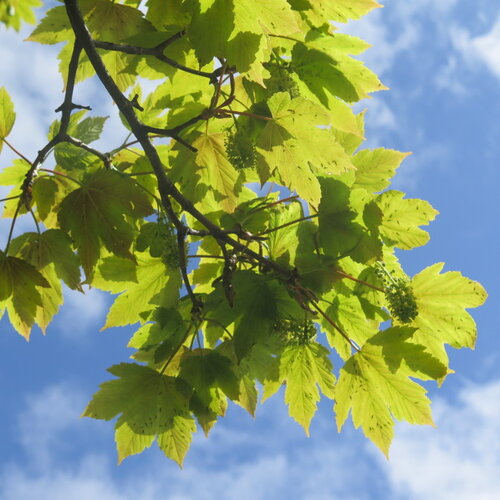 If you have Sycamore trees in or around your horse paddocks this can be a very hard problem to manage both in terms of labour and continuing worry and concern as to whether your horses will become sick from ingesting the leaves, seeds or saplings. Do not however, become complacent and think if horses have grazed a paddock with Sycamore for years and never been poorly that it can’t happen to you and your horse, it absolutely can.
Removal of as many of the fallen helicopter seeds and leaves as possible in the Autumn will reduce the number of saplings that grow in the Spring. Removal of the saplings is also critical to ensure they are not ingested by horses. Saplings can appear as early as February if the weather becomes unusually warm. Just because there has been a frost does not mean all the sycamore seeds will be dead and no longer poisonous.
If you have a very large area covered by Sycamore seeds / saplings the options for you to eliminate or reduce the risk of your horses from ingesting the seeds / saplings are;
- Remove the horses from the area where the seeds / saplings are present
- Remove by hand all visible seeds / saplings on a regular basis
- Hoover up all the seeds in the Autumn
- Mow and collect the saplings
- Spray the Saplings – see more detail here
You can also get the trees tested by the Royal Veterinary College to ascertain if they are poisonous and contain HGA but the levels of HGA can vary from year to year and from one part of a tree to another / one sapling from another. The only way to be sure a tree cannot be fatal is if the sample comes back as completely negative for HGA.
There is also some evidence that sheep will eat the saplings with no ill effects and once all the saplings have been removed you can then allow the horses to graze.
There is also advice that suggests that only allowing horses to graze for a maximum of 6 hours will minimize the risk of them ingesting too many of the seeds / saplings and becoming ill but there is minimal evidence of this to be absolutely certain it is safe.
It is also possible in some situations, where you can prove a tree is poisonous, to have planning permission granted to remove the tree. There has however been limited success in this being granted.
There is a very informative Facebook Group called Atypical Myopathy Awareness which you may want to join to ask more questions and update yourself on the disease and prevention of the same.