
Atypical Myopathy – Kathryn’s Story
Kathryn had owned her Cob Bertie for 14 years, she adored him. They did all sorts of activities together but his life was cut short by Atypical Myopathy.
Bertie lived out at grass 24/7. He’d been at his existing yard for 6 years and no horse had ever previously suffered from Atypical Myopathy whilst on livery there. No other horse got sick, only Bertie. There were 8 other horses on the yard. Each had individual turnout paddocks but there were others in close proximity. 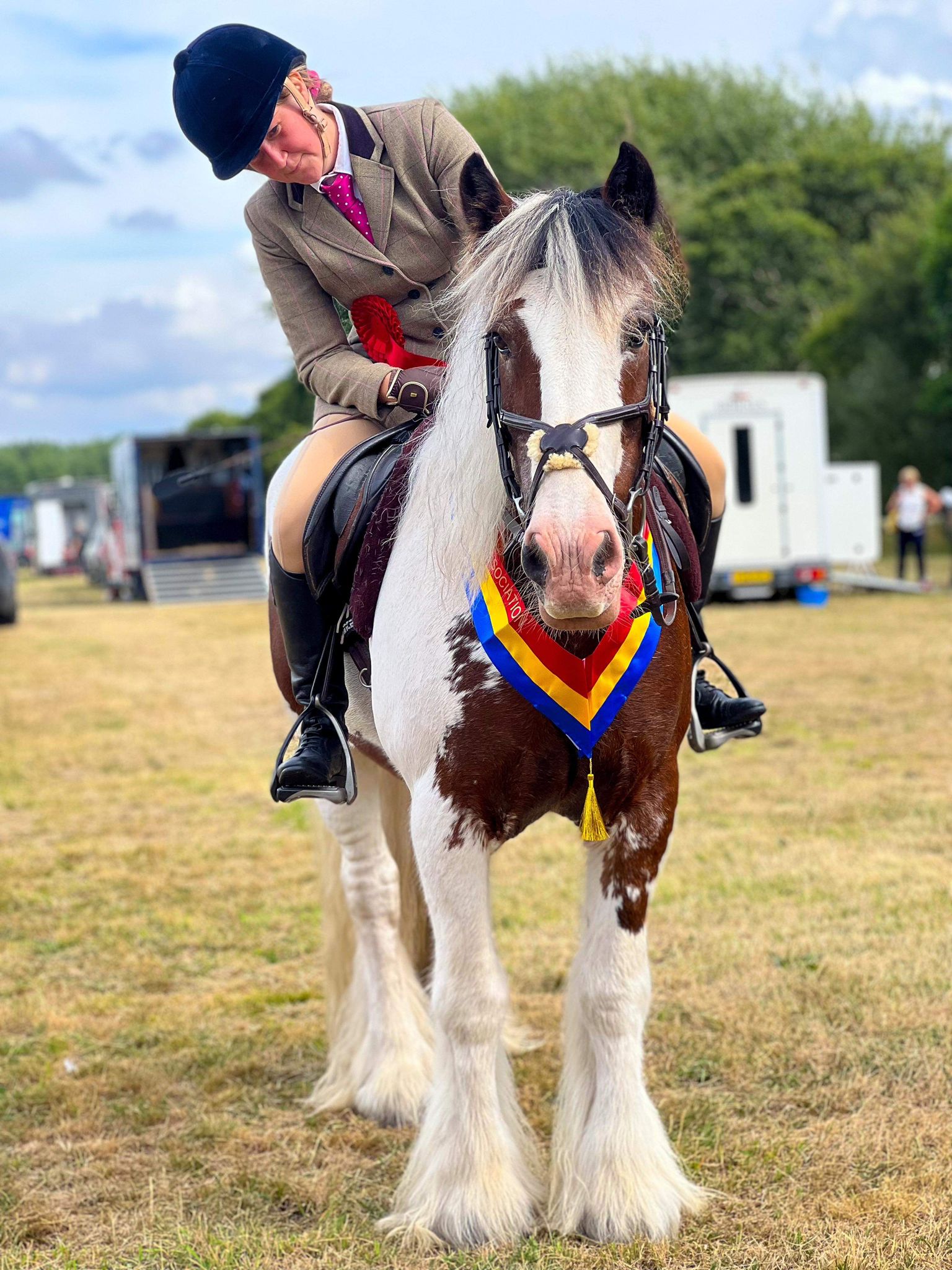
Bertie’s symptoms started in the middle of our lesson on Saturday afternoon, he was really lethargic and just wouldn’t go forward which was out of character for him. I got off because he just wasn’t himself and he was really tucked up. He went down to try and roll. I took him in, untacked him and he started thrashing with his legs and went down but wouldn’t get up.
I called my vet and he came straight out. He said he thought it was colic and it would either pass or he’d need surgery. He gave him painkillers and I was instructed to walk him round every half an hour. I mentioned then that I thought it may be Sycamore poisoning but my vet said his muscles weren’t trembling so it was very unlikely.
An hour later I called the vet again because Bertie wouldn’t stop sweating and trying to lay down. The vet said his intestine was descending so he sent us to Leahurst Equine Hospital for emergency colic surgery. When he arrived his symptoms had subsided, they kept him in to monitor him. But by 4am Sunday he had deteriorated again, I mentioned to the vet I’d seen Sycamore seeds in his field. She didn’t think it was likely as he wasn’t presenting with the classic symptoms of Atypical Myopathy as his muscles weren’t trembling but she said she’d test him to make sure before they operated blind.
The urine test confirmed it was Atypical Myopathy, poisoning from Sycamore seeds. A disease which causes all the muscles in the body to slowly disintegrate. His chances of survival were 50/50, they could only give him painkillers and keep his fluids up, the rest was up to him. I visited Bertie at 3pm, he was hooked up to 4 drips, I stayed for over an hour sat feeding and stroking him and he seemed to perk up but he was sweating and shaking everywhere, could barely life his head up and was struggling to breathe. I think by that point it was too late really.
30 minutes after I left he went down and was struggling to breathe. They had no choice. He was put to sleep just before 5pm on Sunday 16th October 2022. This was approximately 24 hrs from when he first started showing symptoms of being poorly.