
Atypical Myopathy – Reilly – Danielle’s Story
Reilly was a beautiful homebred tobiano ISH, foaled on 26/04/09, we had him his whole life but lost him to Atypical Myopathy when he was just 13yrs old. He was a family horse, an all-rounder, fit and strong. We moved to a village on Salisbury Plain in 2018 and moved him with us, a perfect dream to have him here at home and to have endless miles of wonderful hacking on our doorstep.
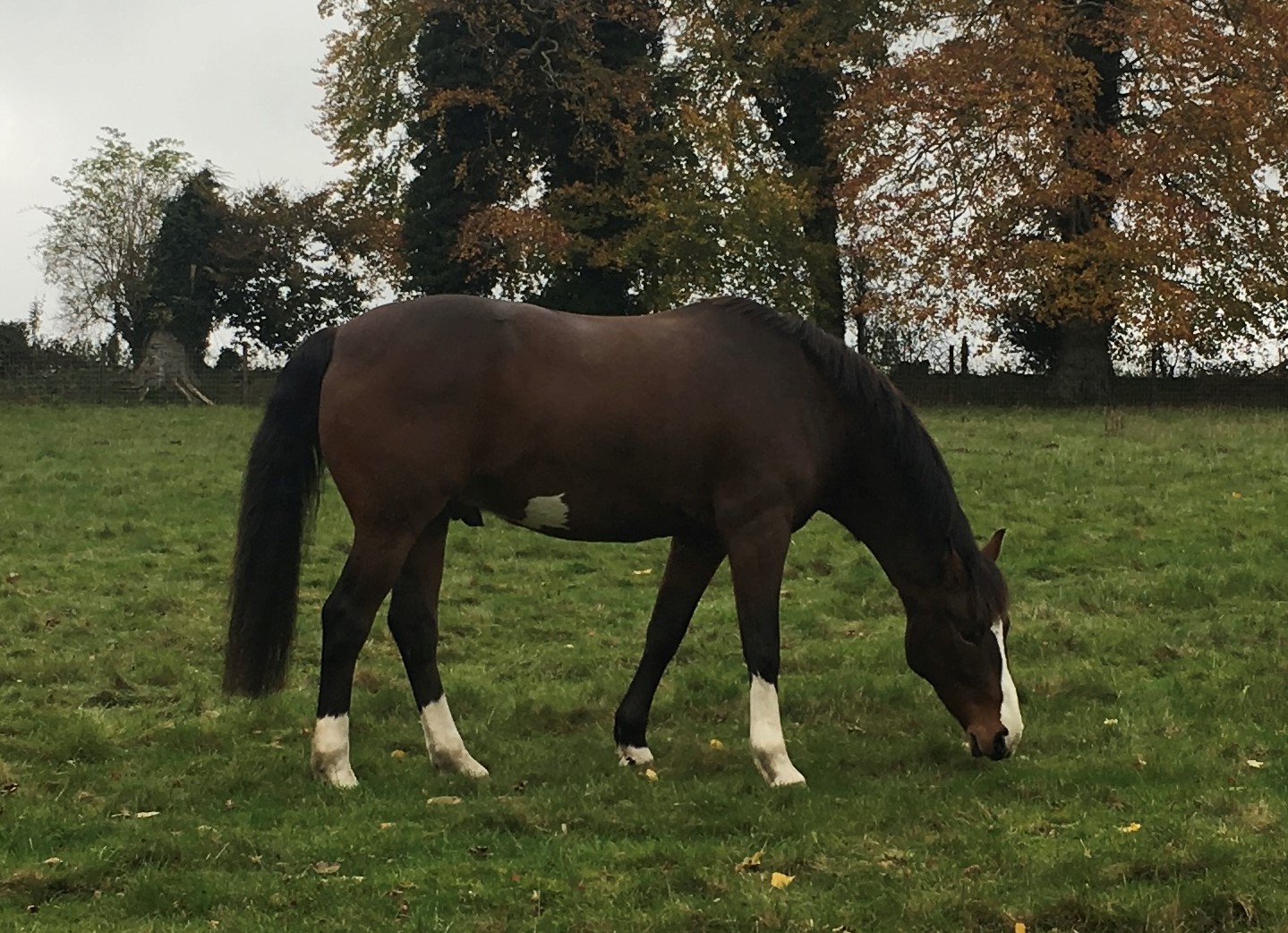 On Good Friday this year (7th April 2023) my 9 year old daughter and I went on a fabulous long ride out on the Plain, loads of trot and canter on the perfect ground in the sunshine. We were out for a couple of hours and both agreed it was the best ride of the year so far, a wonderful day to start the summer hacking. On Saturday 8th April we had another ride planned so I went to catch the horses first thing in the morning. Unusually, Reilly was standing far away from the gate and was calling to me. First of all I thought he might be stuck somehow, maybe in the fence or in a hole. When I got up to him I tried to move him and could immediately see that he was unwilling to walk.
I could see that his breathing was heavier than normal, even at rest I could see his sides heaving in and out and his muscles below his shoulder and round his chest were trembling. I called the vet immediately, still clinging to a faint hope that it might just be a field injury of some sort but deep down I knew. We have a few Sycamore trees on and around our land but had never noticed seedlings amongst the grazing until this year.
Our wonderful vet was with us within half an hour and immediately suspected AM. Because Reilly could not be moved and immediately needed IV fluids he managed to secure the drip to the branches of the trees above Reilly’s head. Reilly had 40 litres of IV fluid that afternoon and then a further 8L of fluid by tube into his stomach later that evening. Also NSAID to try and manage his pain. We managed to move him to a secure pen and checked him throughout the night. At around 6am on Sunday morning he went down. The vet came back and he had 3 more sessions of tubed fluids throughout the day and we were syringing sugary water into his mouth throughout. His appetite was good and he managed to stand for short periods and move himself from a flat out position to the sitting up sternum position, so we had real hope that he would be able to recover.
There followed a difficult night with him in the wind and rain and by Monday morning his attempts at standing had become slightly less frequent and less confident – the weather overnight had made the ground slippery underfoot and he was struggling. We continued with the tubed fluids and pain killers (NSAID and paracetamol) and offered him frequent wet sugary feeds and hay but we all recognised that there had begun a slight decline in his condition.
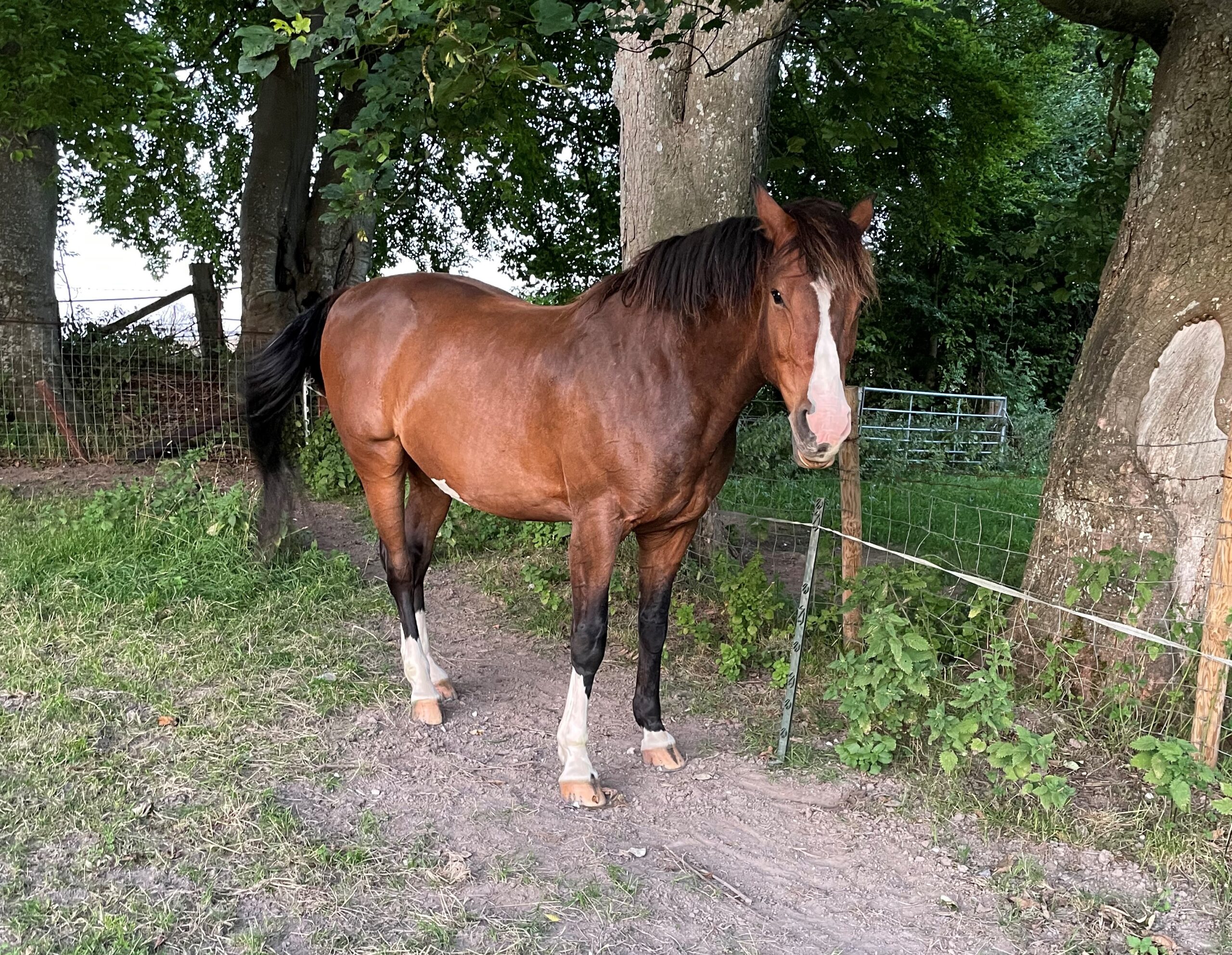 The vet catheterised him on Monday evening and that seemed to bring him some relief but we were disheartened to see that his urine had become darker. Overnight on Monday he made his final successful attempts at standing, once at 1am and once at 2am, I still really thought he just might be able to turn the final corner but sadly, although his will was strong, his muscles were too weak after that. We turned him using ropes several times on Tuesday to try and keep him going and stimulate a final attempt at standing but once his heart rate had started to rise significantly and his breathing was increasingly laboured, I made the heart-breaking decision, with the support of our most brilliant and dedicated vet, to have him PTS. It was my daughter’s 10th birthday.
RIP our beautiful boy. I will forever carry the weight of responsibility for not ensuring that I cleared all the seedlings from his grazing. I underestimated the danger to him because he’d been in the same field for years without issue and had plenty of forage. I was unaware that the toxicity of the seedlings could vary so dramatically from year to year.
His herd mates are unaffected.